
Wen’s Last Day
The Cabin at the End of the WorldThis flow follows Wen from an imaginative child’s ordinary summer project through captivity, traumatic loss, and her parents’ enduring memory.
increasing Bearing strength in each event
 decreasing
Bearing strength in each eventdecreasingAn Eight-Year-Old Naturalist
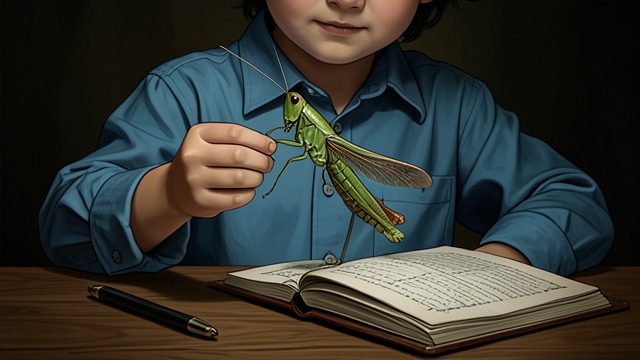
An Eight-Year-Old Naturalist
Curiosity at Work
Wen catches grasshoppers, names them, and records their features in a notebook. She imagines helping animals when she grows up.
A Child with a History
Her repaired cleft lip and adoption inform how she thinks about her face, family, and past. Her curiosity exists alongside these private questions.
Wen’s voice makes the cabin’s later violence register as an invasion of a child’s life, not an abstract test.
A Friendly Stranger
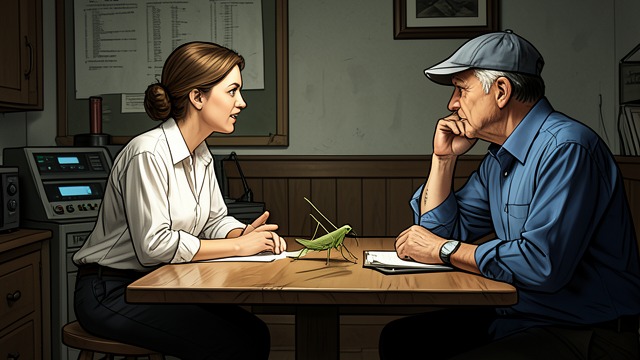
A Friendly Stranger
A Conversation in the Yard
Wen talks with Leonard while searching for grasshoppers. His warm smile and interest in her project make him seem safe.
Trust Put at Risk
Leonard asks about Wen’s family, birthday, and scar, then tells her that a terrible choice awaits. She tries to withdraw as his companions arrive.
Her good-faith judgment is not foolish; Leonard deliberately presents himself as a friend before revealing the danger.
A Child in Captivity
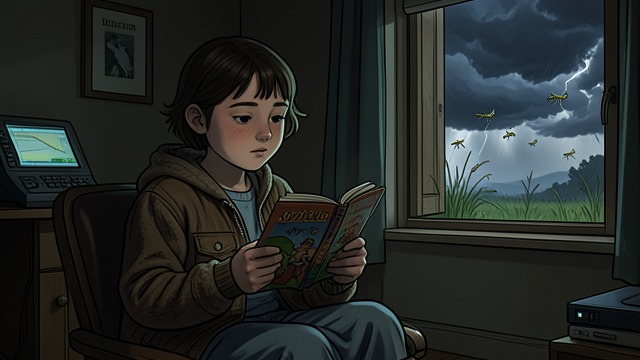
A Child in Captivity
Witness to Fear
Wen brings her dads inside and describes the visitors. She later watches them restrain Eric and Andrew and struggles to understand why Leonard still calls himself her friend.
Coping in Small Gestures
She focuses on cartoons, squeezes her thumbs inside her fists, and worries about the grasshoppers. These habits offer structure without removing her terror.
Wen’s quiet responses show the cost of making a child live inside adult violence.
A Promise Broken
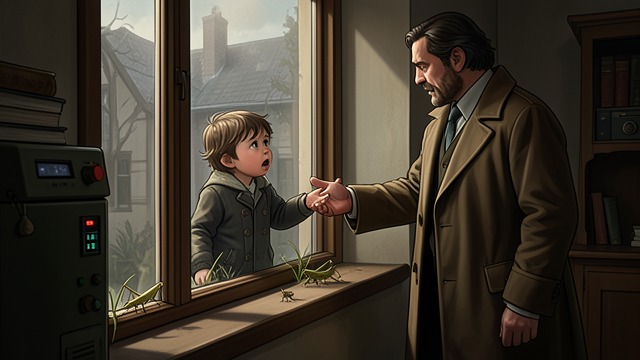
A Promise Broken
Hope for the Grasshoppers
Wen panics about the insects she left outside, then asks to go free them. Her plea interrupts the renewed ultimatum.
A False Assurance
Leonard says he released them and promises to protect her. Wen has already learned that his assurances do not make the situation safe.
His inability to keep his promise foreshadows the irreversible failure of his claimed care for her.
The Accidental Death
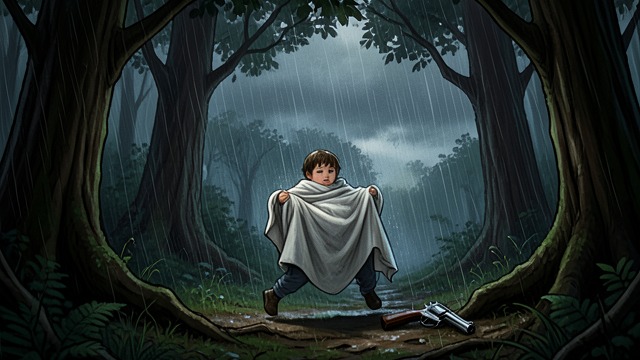
The Accidental Death
The Gun Discharges
As Andrew and Leonard wrestle for control of the gun, a shot kills Wen. Neither parent intended to hurt her, but the distinction cannot undo the loss.
A Life Remembered
Eric and Andrew wrap Wen in a bedsheet and carry her away from the cabin. Their final choice is to remember and love her, not to treat her death as acceptable payment.
Wen’s short life remains the emotional center of the novel’s unanswered moral question.
Six days before Wen’s birthday
The afternoon before her birthday
The first afternoon and night of the siege
The second morning of captivity
During the second day’s struggle
